
Inflation Just Hit a 3-Year High — Here's What It's Actually Costing Your Family

When the government reported that inflation reached its highest level in three years last month, most Americans felt it before they even saw the headline — at the gas pump, in the grocery aisle, and in the gap between what their paycheck says and what their bills demand. For millions of families trying to make ends meet, the numbers are more than statistics; they reflect real decisions about what to cut and what to keep.
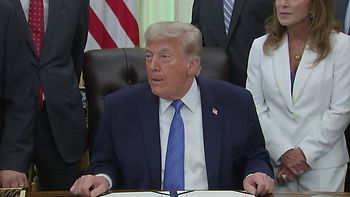
The Consumer Price Index rose 4.2% in May on an annual basis, the third straight month of acceleration and the steepest reading since April 2023. President Trump, speaking from the Oval Office shortly after the report was released, called the numbers "great" — a reaction that surprised many Americans already struggling with higher costs. "I love it. The numbers were great. You know what I really love? I love the inflation." Trump later said he had been taken out of context, clarifying: "I love the inflation numbers because of what I'm talking about," suggesting the figure came in lower than expected. He did not offer a specific timeline for when prices might fall.
Gas Is the Biggest Driver — But Not the Only One
The single largest factor pushing prices higher right now is energy. The ongoing war with Iran led to the closure of the Strait of Hormuz, a critical global oil shipping route, sending fuel costs sharply higher. Gasoline prices jumped 40.5% compared to a year ago and were responsible for more than 60% of May's overall inflation increase. Total energy costs climbed 23.5% annually. Trump has predicted prices will "come down like a rock" once the conflict ends, though he has not specified when that might happen.
The pain at the pump, however, is only part of the picture. Food prices have climbed too. Tomatoes are up 32% from a year ago. Lettuce has risen nearly 25%. Coffee costs 17.5% more than it did last year. For families already stretched thin, these are not abstract percentages — they add up in real dollars every time someone heads to the store.
Tariffs Are Adding to the Pressure
Beyond the energy crisis, economists say trade policy is also contributing to higher prices. A study from the Federal Reserve Bank of Dallas published last month found that tariffs imposed by the Trump administration have now fully passed through to consumers, meaning businesses are no longer absorbing the added costs — shoppers are. Researchers calculated that without those tariffs, core inflation in March would have been 0.8 percentage points lower. Analysts at the Tax Foundation estimate the tariff burden adds up to roughly $1,000 per American household this year.
Paychecks Are Not Keeping Up
Wages have been rising, but not fast enough to offset inflation. Average hourly earnings grew 3.6% over the past year — a figure that would look solid under normal conditions. But when prices are climbing above 4%, that wage growth leaves workers behind in real terms. Pew Research found that real wages — what your paycheck actually buys — fell between 1% and 3.5% over the five years ending in December 2025, no matter which inflation measure was used. Joseph Brusuelas, chief economist at RSM, projected that real hourly earnings would be "flat to negative for April and definitely negative in May."
In practical terms, this means many workers are earning more dollars but buying less with them. That gap is showing up in how people behave. Lower-income families have pulled back on spending, including on gasoline, while households earning $150,000 or more show few signs of cutting back. Federal Reserve researchers have described this divide using the term "K-shaped" economy — one where higher earners continue largely unaffected while everyone else tightens their budgets.
Public Confidence Is Near Historic Lows
The University of Michigan's consumer sentiment index fell to 49.8 in April — the lowest reading in the survey's 74-year history. Three of the four all-time low readings have occurred in the past nine months. Separately, Pew Research found that 66% of Americans now describe inflation as a "very big problem," up from 63% the year before.
Heather Long, chief economist at Navy Federal Credit Union, described the situation plainly: "Americans are literally getting squeezed now. It's not just a vibe, it's a financial reality."
A poll released this week found that 69% of Americans disapprove of how Trump is handling inflation, with only 18% approving. Political leaders on both sides of the aisle responded quickly to Trump's "I love the inflation" comment. Senate Minority Leader Chuck Schumer wrote: "Trump really said, 'I love the inflation.' On camera. For all of America to hear. His contempt for you knows no bounds." House Minority Leader Hakeem Jeffries said Trump had found "something that Donald Trump loves as much as he loves himself."
Elizabeth Renter, senior economist at NerdWallet, summed up what the numbers mean for ordinary people after the May report: "Consumers are paying more for essentials, and they can feel powerless to mitigate this pain."