
Pope Leo XIV and President Trump Are at Odds — What Americans Need to Know

A sitting U.S. president and the leader of the world's 1.4 billion Catholics are in a public dispute, and it is drawing attention across the country and around the world. The disagreement centers on some of the most fundamental questions in American public life: What role should faith play in politics? And what happens when a religious leader speaks out against the actions of a powerful government?
President Donald Trump has publicly called Pope Leo XIV "weak," accused him of being influenced by the "Radical Left," and told the pontiff to "focus on being a Great Pope, not a Politician." Vice President JD Vance joined in, saying the Pope should "stick to matters of morality." The Pope's response has been calm and direct: he says he is not backing down.
Who Is Pope Leo XIV?
Pope Leo XIV, born Robert Francis Prevost, made history on May 8, 2025, when he became the first American-born pope ever elected. From the moment he appeared on St. Peter's Balcony, he signaled the kind of leadership he intended to offer. His opening words were: "Peace with you all … the first greeting of the risen Christ, the Good Shepherd who gave his life for the flock of God." The following week, speaking to journalists, he quoted the Sermon on the Mount: "Blessed are the peacemakers."
Before his election, Prevost spent years as a bishop in Peru, working directly with some of the world's most vulnerable communities. In 2022, he publicly described Russia's invasion of Ukraine as an "imperialist" act. In early 2025, while still a cardinal, he shared an article that pushed back on Vice President Vance's framing of Christian love, with the headline reading: "JD Vance is wrong: Jesus doesn't ask us to rank our love for others." His positions have been consistent — rooted in what he describes as the core teachings of the Christian faith.
What Triggered the Public Dispute
The conflict came to a head over Easter weekend. While President Trump was publicly warning Iran of potential military strikes — including comments that suggested the possible destruction of major infrastructure and what he described as the "eradication" of a "whole civilization" — Pope Leo was delivering a Palm Sunday homily at the Vatican. He described Jesus as the "King of Peace," warned that God "does not listen to the prayers of those who wage war," addressed the ongoing conflicts in Ukraine and Gaza, and called Trump's comments about Iran "truly unacceptable."
Trump's reaction came quickly, in the form of a social media post. He wrote: "I don't want a Pope who criticizes the President of the United States because I'm doing exactly what I was elected, IN A LANDSLIDE, to do." He also claimed, without presenting any supporting evidence, that the Vatican had chosen an American pope as a way to manage its relationship with the U.S. administration, writing that Leo "wasn't on any list to be Pope" before his elevation. That claim has no known factual basis.
The Pope's Response
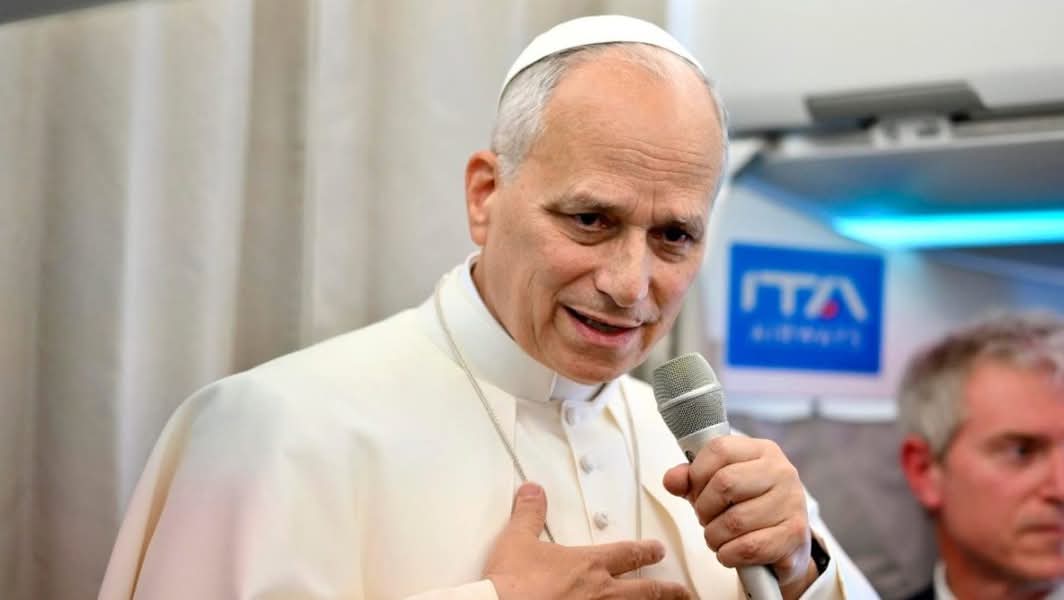
Speaking to reporters while traveling to Africa, Leo XIV addressed the situation directly and without apparent concern for the political pressure being applied. He said: "To put my message on the same plane as what the president has attempted to do here, I think is not understanding what the message of the Gospel is. I'm sorry to hear that, but I will continue on what I believe is the mission of the church in the world today."
When pressed further, he was equally clear: "I'm not afraid of the Trump administration, or of speaking out loudly about the message of the Gospel, which is what the Church works for."
Since his election, Leo has addressed conflicts in Gaza and Ukraine regularly, always framing his comments through the lens of what he calls Gospel-rooted peace and justice. He has also made a point of speaking to the world primarily in Italian and Spanish rather than English — a choice widely seen as a deliberate statement that his role is that of a global religious leader, not a representative of any single nation.
Why This Matters to Americans
The dispute raises questions that go beyond any single political moment. Tens of millions of Americans are Catholic, and millions more belong to Christian traditions that share the same scriptural foundations Leo XIV is drawing on. The Sermon on the Mount and the Parable of the Good Samaritan are among the most widely known passages in the Bible. When a pope cites them in the context of war and human suffering, he is not introducing new or controversial theology — he is repeating teachings that have been central to Christianity for two thousand years.
The disagreement, at its heart, is about what religious leaders are and are not permitted to say about the decisions of governments. President Trump's public comments suggest he believes religious figures should not weigh in on matters like military action or immigration policy. Pope Leo XIV's position — and the position of the Catholic Church more broadly — is that these are precisely the kinds of issues the Gospel speaks to most directly.
The public back-and-forth between the two shows no signs of cooling, and it is likely to remain a topic of conversation for American Catholics, evangelical Christians, and anyone following the intersection of faith and political power in the United States.